
Start a Lincoln Property Search
Start with the address-to-parcel route. It is the most direct Lincoln County property search path. Schneider's qPublic application serves as the county assessor's official search link. The utility offers owner, address, and parcel modes. Any filter or value-history feature beyond those depends on what the live screen displays.
Once a match opens, copy everything the card shows. That means the owner of record, situs and mailing addresses, and parcel identifier. Include legal-description clues, value fields, and any deed or sale reference. A parcel identifier is the tax-map key assigned to one assessed tract. It is often more stable than a street spelling.
- Enter the physical street address in Lincoln qPublic.
- Open the best parcel match and copy its identifiers and listed owner.
- Search that owner in GSCCCA, then locate the latest vesting deed.
- Check the same parcel through the Tax Commissioner and map layer.
- Save references and request certified or offline material from the custodian.
Lincoln qPublic Search Routes
The official Lincoln qPublic application is the first portal to try for an address. The assessor landing page notes that its published data is a tax digest, not a tax bill. Keep that distinction in mind. Searches run by owner or name, address, and parcel.
| Lookup route | Start with | Best next key | Main risk |
|---|---|---|---|
| Address | Street number and road | Parcel identifier | Postal or road-name mismatch |
| Owner | Recorded name variant | Parcel and situs | Trust, estate, or company name |
| Parcel | Tax-map identifier | Deed reference | Split or consolidation |
Portals stall sometimes. The assessor office can take it from there. Contact the Board of Tax Assessors at 182 Humphrey Street in Lincolnton, 706-359-5502, during posted weekday hours of 8:00 a.m. to 5:00 p.m. Have the parcel number and the date checked ready. The assessor's local landing page supplies the official search entry and office details.
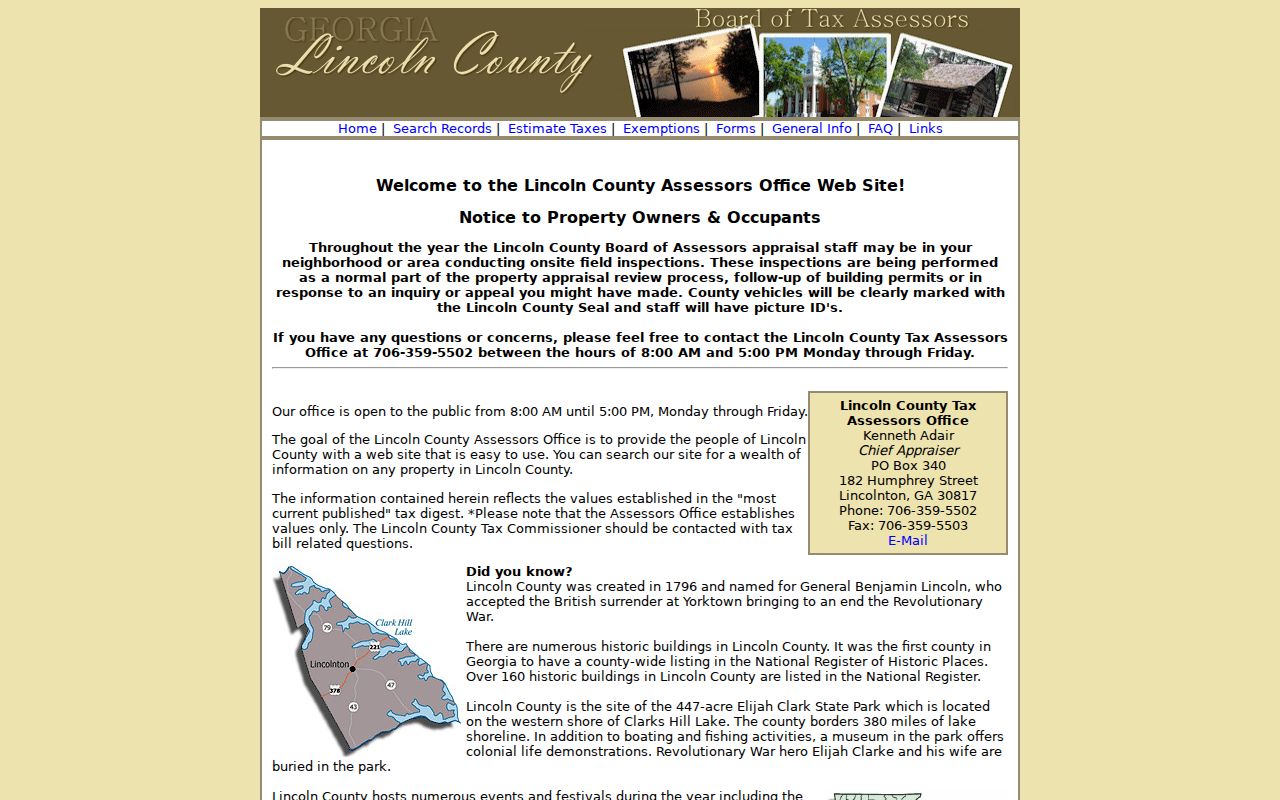
This screen shows which office keeps the assessment data.
GSCCCA Names Need Exact Inputs
When the current or a former owner is known, a Lincoln County property search moves to GSCCCA's real-estate name index. The free form searches names, not street addresses. Enter personal names last name first. Legal entities should be tested under their full recorded names, including punctuation and spacing variants.
| GSCCCA field | Purpose | Lincoln search practice |
|---|---|---|
| Party type | Grantor or grantee role | Run both when tracing transfers |
| Instrument type | Limits document category | Begin broad if deed type is unknown |
| County | Recording jurisdiction | Select Lincoln County |
| Name | Recorded party | Use last-name-first for people |
| Date range | Narrows filing period | Remember the 1990 central baseline |
| Results display | Controls returned list | Expand when a common name is used |
The statewide index claims coverage from January 1, 1990 forward. Not every Lincoln image starts there, though. Check older books with the Clerk for local image availability. The GSCCCA name-search screen displays the control set before a query runs.
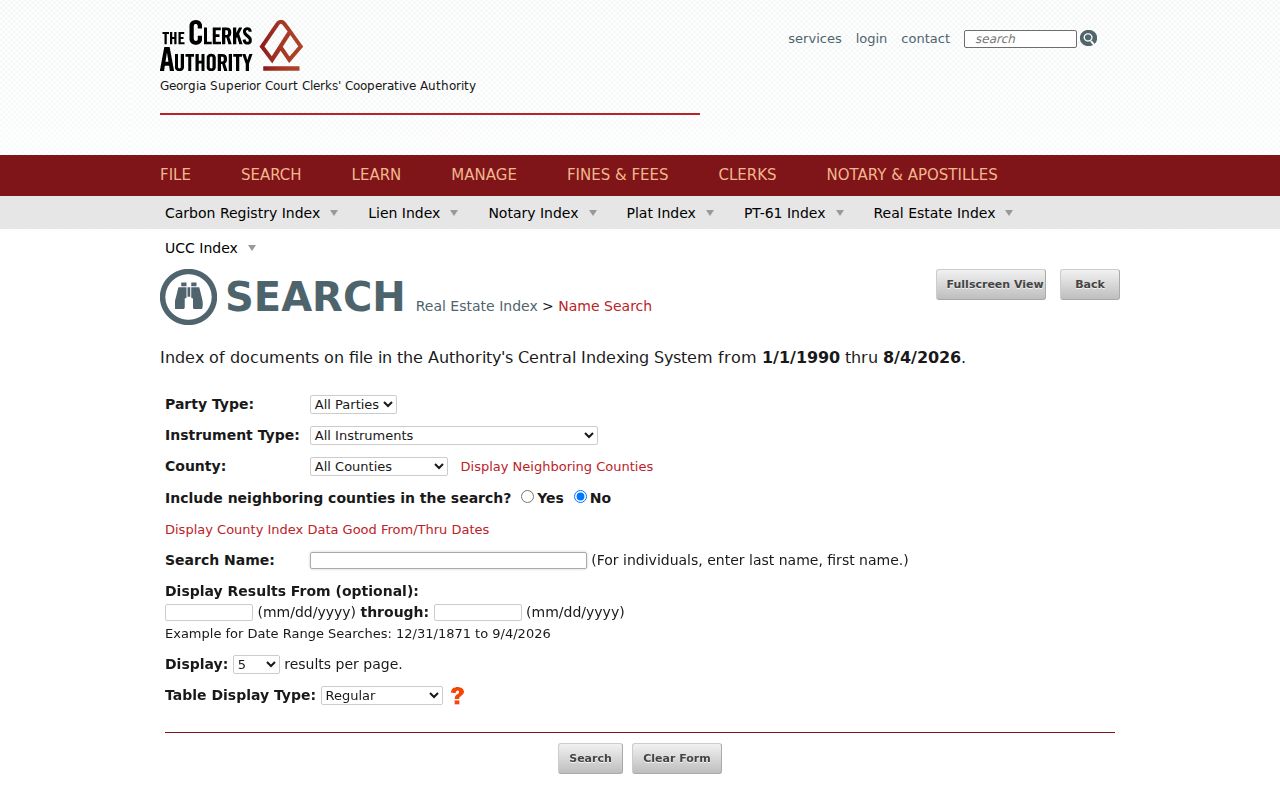
Party-role and instrument filters matter here. Choosing the wrong role can hide a transfer that a broad owner-name search should have caught.
Mailing and Situs Are Different
The situs address identifies the physical property. The mailing address tells the assessor where notices go, and it can be a post-office box, an out-of-county address, or another property the same person owns. Never assume the two are supposed to match. Preserve both fields in a Lincoln County property search.
Situs address: the physical location of the parcel. Mailing address: where owner correspondence goes. Owner of record: the name on an agency's current roll, which may lag a newly recorded deed. APN or parcel number: the assessor's identifier for the tax-map tract.
Older properties need extra care. An old house or rural tract may have an early deed. That deed may not carry a modern situs. Bring the legal description into the historic search. Add district, land lot, road, creek, and adjoining-owner clues. Postal cities can mislead. Lincolnton is the county's only incorporated city, yet a 30817 mailing address may sit outside city limits. County assessment and recording still apply throughout Lincoln County. City zoning does not follow the postal line. For permit questions, ask City Hall and consult the current zoning map.
Read a Lincoln Property Result
A result inventory keeps one screen from being mistaken for the full record. Live parcel cards vary in what they display. Treat the entries below as fields to check on the returned card. Not every field appears for every parcel.
| Owner of record | Confirm the exact name and whether an entity or estate is listed. |
|---|---|
| Situs and mailing addresses | Keep the property location separate from the notice address. |
| Parcel number | Reuse the tax-map key across assessor, tax, and map work. |
| Value entries | Record the year and labels for fair-market, assessed, land, or improvement amounts actually shown. |
| Legal description | Copy lot, block, subdivision, land-lot, district, or deed clues verbatim. |
| Sale or deed reference | Verify any date, price, book, page, or instrument in GSCCCA. |
The roll cannot show unrecorded interests. It cannot settle disputed boundaries either. A sale field may lag, showing the assessor's last captured transaction rather than the newest deed filed with the Clerk, so note the data year and search date.
Book and Page Rescue Address Gaps
A known deed reference opens a better door through GSCCCA's book-and-page search. The form asks for county, book, and page. It sidesteps name spelling entirely. It can also reopen a chain from a parcel-card reference, cited plat, court filing, or prior deed.
GSCCCA also offers an optional property mode built on subdivision name and date range. Participation varies by county. Do not count on it as a Lincoln street-address lookup unless a live result confirms it. Address and PT-61 searching are separate premium features.
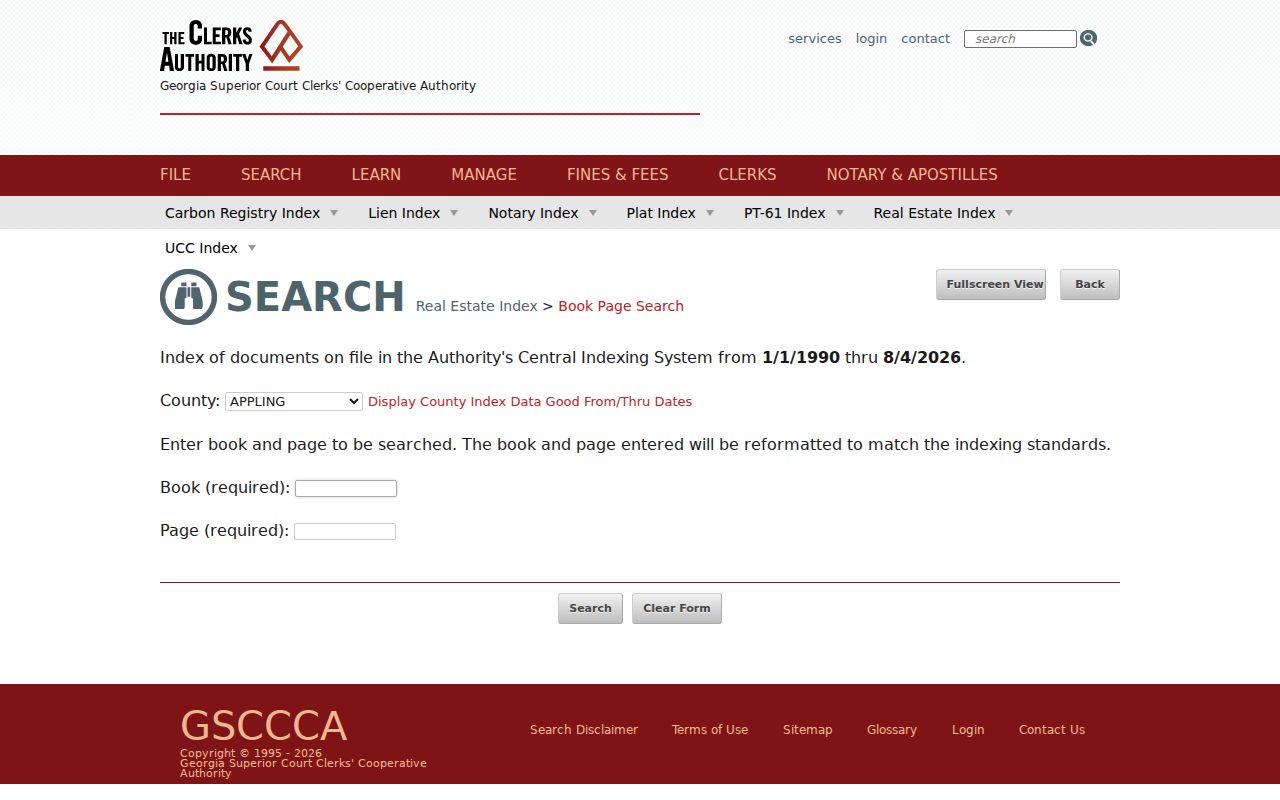
Copying a reference exactly from qPublic or a prior instrument saves time.
Lincoln Search Systems Do Not Merge
Lincoln County keeps its property records in separate silos. The assessor, the recorder, the Tax Commissioner, and the parcel layer each publish their own product. qPublic carries the assessment parcel. GSCCCA indexes recorded deeds, liens, plats, and PT-61 declarations in distinct modes. GovernmentWindow runs the tax-payment route. A hit in one portal is a lead for the next, not proof the systems talk to each other.
Current parcel route
Start with qPublic. It shows the listed owner, situs, mailing address, parcel key, and published assessment details for Lincoln County parcels.
Recorded instrument route
Use GSCCCA or the Clerk for grantor, grantee, deed, lien, plat, and recording references.
Once the parcel is identified, move to the right office. Value questions belong with the dedicated Lincoln tax sources. Boundary questions belong with the recorded plat, and often a survey too, since the mapped polygon alone can mislead.
Dates also differ across systems. A deed carries a recording date. The roll uses an annual January 1 value date. A tax account belongs to a billing year, and the parcel viewer refreshes on its own schedule. Write every date down. Two records can disagree simply because each answers a different time-based question about the same property.
Entity Owners Need Two Checks
The owner of record may be an LLC, trust, or estate rather than a person. Search the exact entity name in both qPublic and GSCCCA. Then compare the grantee name on the latest deed. For a Georgia corporation or LLC, the Secretary of State business search can confirm the entity's public registration entry. That record does not reveal beneficial ownership of land. It does not replace the deed either.
Probate can also break a simple sale-to-sale chain. An executor's deed, administrator's deed, year's-support proceeding, or estate filing may explain why the assessment name and the last warranty deed do not line up. Probate Court and the Superior Court Clerk keep different record sets.
Request Lincoln Records Offline
A failed portal is not the end of a Lincoln County property search. Call or visit the custodian. You can also submit a narrow request under the Georgia Open Records Act. The law generally requires a response within three business days. Failing that, the office must provide a written statement of when records will be available, the expected cost, and any exemption claimed.
Give the office everything known. Provide the parcel number, street and mailing addresses, party names, instrument type, book and page, and date range. The first fifteen minutes of search and retrieval time is generally free. Copying is generally capped at twenty-five cents per page. Ask the Clerk about certified-copy charges, since the county publishes no certified-deed fee schedule.
For historic digging, try two sources. The John Cullars Genealogy Room at Lincoln County Library and the Digital Library of Georgia courthouse collection offer maps, family material, and records beyond the modern index. Verify holdings before visiting. The courthouse collection includes plats, debt papers, and powers of attorney. It also holds petitions, affidavits, and writs of fieri facias. Use names, dates, land descriptions, and court context together. Never attach an old filing to a present parcel on a surname alone.
Compare Lincoln Property Search Keys
The best key depends on what is known and which office holds the record. An address is a present-day place label. An owner name is a party label. A parcel number is an assessment-system identifier. A deed book and page is a recording-system reference. Preserve all four as they surface during a Lincoln County property search.
| Search Key | Best For | Where It Works | Watch Out |
|---|---|---|---|
| Address | One current place | qPublic and parcel layer | Mailing place, road variant, or old number |
| Owner name | Parcels or instruments tied to a party | qPublic and GSCCCA | Entities, estates, initials, and same names |
| Parcel number | Exact assessed tract | Assessor, tax, and map systems | A split or consolidation may create a new key |
Not a title search. A Lincoln County property search identifies public entries but does not guarantee clear title. Recorded and unrecorded interests require professional title review.
Save a dated copy of every result. Public rolls and indexes change, and the assessor publishes no fixed refresh cycle. A newly recorded deed can be more current than the assessment owner field.
Splits and consolidations need extra care. Search both the current identifier and the parent tract described in the older deed. A modern parcel key may not exist in the historic index. The legal description, subdivision name, land lot, district, and adjoining-owner calls form the bridge. If details conflict, ask the assessor which tax-map action created the present parcel. Ask the Clerk for the cited plat or deed.
Keep negative results too. Note the spelling, date range, county selection, party role, and instrument filter used. A blank result under one name does not prove no deed exists. It may reflect a variant spelling or an entity name. It may also reflect a date outside the central index or a document recorded under a former owner.